


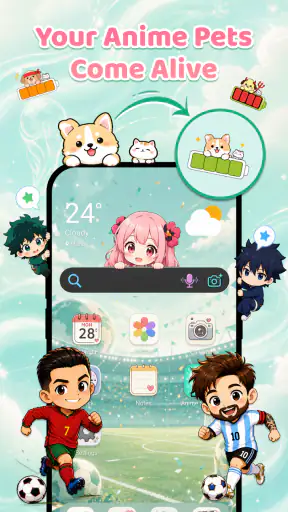
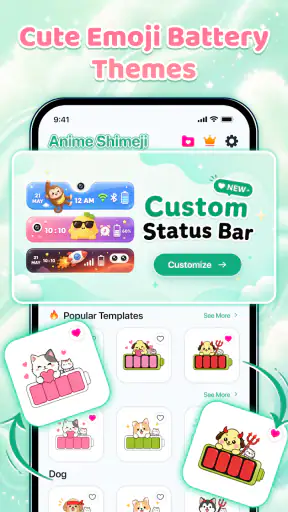
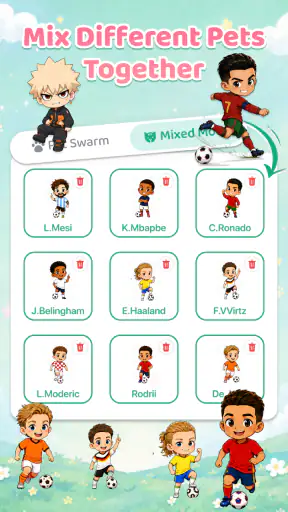

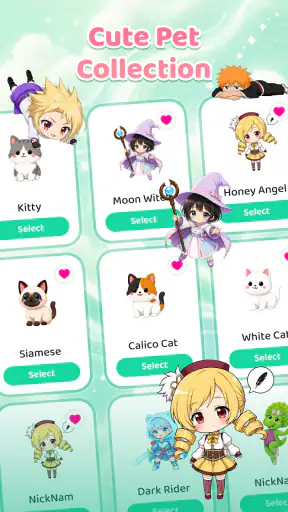
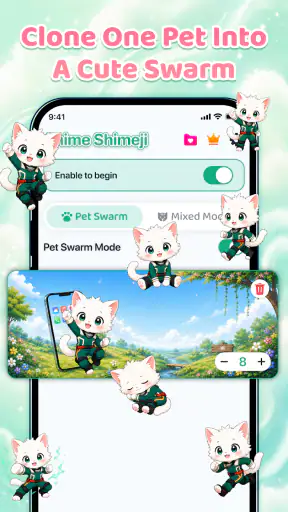
I tried Emoji Battery & Shimeji Pet as a small personalization layer for a phone that normally feels purely functional. The idea is simple: make the battery area more expressive with an emoji-style icon and add a Shimeji screen pet for a bit of movement and character. It is not a productivity tool, a game with a deep progression system, or a replacement for the phone’s standard battery display. Its appeal is the mood it adds to everyday phone use.
That distinction matters when deciding whether it belongs on your device. I found it most interesting on a shared household tablet and on a personal phone that several people in the home occasionally pick up. A playful battery icon gives the device an immediately recognizable look, while the screen pet can make an otherwise ordinary lock-screen or home-screen moment feel less sterile. At the same time, the app is better understood as decoration than as something that changes how the phone works.
The app is free to install, with optional in-app purchases ranging from $2.99 to $19.99 per item. It is rated for Everyone, works on Android 8.0 and newer, and comes from Tools for Everyday - AI Tasks. Its current version is 1.0.3. The listing shows a 4.3 average from around 38 thousand ratings and more than a million installs, so it has clearly found an audience beyond a handful of novelty users.
How it feels on a shared household device
The most convincing use case for me was a device that moves between people in the same home. Imagine a family tablet used for recipes in the kitchen, music in the living room, quick searches, and occasional entertainment. A conventional battery indicator is easy to overlook, but an emoji battery icon makes the device feel deliberately customized. The Shimeji pet adds another layer of personality without requiring anyone to learn a new system.
That shared-device appeal comes with a practical trade-off. Personalization is only enjoyable when everybody agrees that the decoration is welcome. One person may find a small animated companion charming, while another may see it as visual clutter when trying to read, shop, or follow instructions. I would discuss the preferred character style and placement before setting it up on a family device. The app can be fun for a household, but the decision should not silently belong to the person who installed it first.
I also like the possibility of using the battery icon as a quick visual cue for ownership. If several similar devices are charged together, a distinctive emoji treatment can help someone identify the customized phone at a glance. That is not a security feature and should never be treated as one, but it is a useful bit of visual coordination. For a child’s tablet, a parent’s phone, or a communal device, the appearance can reduce confusion without changing the underlying charging information.
Still, I would not install it on every device in the house. Phones used for work, navigation, accessibility, or time-sensitive tasks benefit from a quieter interface. The app’s charm depends on having spare attention for it. If the device already has a busy wallpaper, many widgets, and frequent notifications, another animated element may make the screen harder to scan rather than more pleasant.
Keeping the setup within clear boundaries
Before choosing a screen pet, I would decide what “always visible” should mean in practical terms. A decorative companion is most noticeable when you are already looking at the screen, but that does not mean it belongs everywhere. On a shared device, I prefer a restrained arrangement: one character, a simple battery style, and enough empty space that icons and text remain easy to find.
This is especially important on smaller phones. A design that looks balanced on a large screen can feel crowded when app icons, status information, and the pet all compete for attention. I would test the home screen during ordinary tasks rather than judging it only from the setup view. Open a messaging app, check a calendar, read a long note, and use the keyboard. If the decoration makes those actions feel visually noisy, scale back the look or return to the standard arrangement.
The battery element deserves its own boundary. It is decorative, but it still needs to communicate battery status clearly enough for everyday decisions. I would treat the emoji as a visual accent, not as a substitute for checking the actual percentage when leaving home or starting a long trip. A playful icon can catch the eye, yet a conventional numerical indicator remains the better choice when accuracy and speed matter.
There is also a social boundary around who gets to change the appearance. On a personal phone, that choice is straightforward. On a device shared by partners, siblings, or roommates, it is better to agree on a style before one person replaces the look everyone else sees. The app works best when personalization feels collaborative rather than imposed.
Coordinating charging and daily routines
One unexpectedly useful angle is coordination. In a household with several devices, people often ask the same questions: Which phone is nearly empty? Which tablet belongs to whom? Has the shared device been charged? Emoji Battery & Shimeji Pet cannot organize a charging schedule or manage accounts, but its visual customization can support a simple routine. A distinctive appearance makes the shared device easier to identify, and a familiar battery treatment can encourage someone to check it before putting it away.
For example, I would use the customized tablet in a kitchen charging area and make its appearance clearly different from personal phones. After using it for a recipe or video call, the next person can recognize it immediately and check the battery before leaving it on the counter. This is a small improvement, not automation, but small visual cues often help shared routines work more smoothly.
It is important not to overread that benefit. The app does not turn a household into a coordinated device network, and the decoration does not tell you who is allowed to use the phone. It simply gives the device a recognizable identity. If your household needs separate profiles, parental controls, usage limits, or formal device management, the phone’s operating system or a dedicated family-management solution is a better fit.
I would also avoid using the screen pet as a reminder system. A moving character may attract attention, but it is not the same as a reliable notification, alarm, or task list. For charging reminders, school schedules, medication, or work deadlines, use tools designed for those jobs. The strength here is atmosphere and recognition, not dependable coordination logic.
Age, trust, and a child’s access to the phone
The Everyone content rating makes the app approachable for a broad household audience. That makes sense for a personalization tool built around emojis and a friendly screen companion. I can see why a child might enjoy choosing the look of a family tablet, and why an adult might appreciate a harmless way to make an older device feel less plain.
Even so, an age rating is not a substitute for supervision or a conversation about purchases. The app is free to install, but optional items cost between $2.99 and $19.99 each. On a shared device, I would make sure children know that tapping a decorative option may lead to a purchase flow, and I would keep purchasing decisions with the account holder. That is less about distrust of the app and more about teaching a sensible boundary between free customization and paid extras.
Account boundaries deserve attention too. If several people use the same device, the person who installs the app may effectively become the person who controls its appearance. Before handing the phone to a child or another family member, I would explain what has been changed and who can change it back. This avoids a common household misunderstanding: assuming that a visual customization belongs to the user currently holding the device when it actually affects everybody.
I would also pay attention to temperament. Some children enjoy animated companions, while others find movement distracting or irritating. The same is true of adults. A screen pet can make a device feel welcoming, but it can also become background noise during reading or homework. The right test is not whether the feature is technically available; it is whether the person using the device can still concentrate comfortably.
Trust works both ways here. Adults should avoid presenting the pet or battery icon as a monitoring tool, because it is not a substitute for honest communication about device use. Children, meanwhile, should understand that changing the screen’s appearance is different from changing the phone’s owner settings or making purchases. Clear expectations make the playful part stay playful.
Where it beats ordinary personalization tools
Compared with changing only a wallpaper, this app offers a more active kind of customization. A wallpaper changes the background and then largely disappears into the routine. The emoji battery treatment remains connected to a useful phone element, while the Shimeji pet gives the screen a sense of movement. That combination is the reason I would choose it over a static image when I want the device to feel more expressive.
Compared with a full launcher replacement, it is also conceptually lighter. A launcher can transform icons, gestures, folders, and navigation, but that depth brings setup time and the possibility of disrupting familiar habits. Emoji Battery & Shimeji Pet is better for someone who wants a visible change without rebuilding the phone’s entire interface. The trade-off is that it cannot offer the same level of structural control as a launcher.
Compared with ordinary emoji or wallpaper apps, the battery-focused idea gives the customization a practical anchor. The phone is not merely decorated; one of its most frequently checked indicators becomes part of the visual style. That is a clever detail, although it also means the result needs to remain readable. A wallpaper can be purely artistic, while a battery display still has a job to do.
Compared with a dedicated virtual-pet game, this app is much more casual. I would not install it expecting complex care mechanics, a long-term challenge, or a substantial game loop. Its value is the companion-like presence on the screen, not a structured game experience. Someone wanting a real pet simulation should look elsewhere; someone wanting a small animated accent may find this approach more comfortable.
Small habits that make the experience better
My first tip is to start with the battery customization before adding the screen pet. That gives you a baseline for deciding whether the phone already feels sufficiently personalized. If the battery icon alone delivers the visual change you wanted, adding more movement may be unnecessary. This two-step approach keeps the screen from becoming busy simply because every option is available.
My second tip is to evaluate the app in the places where the device is actually used. Try it in bright daylight, in a dim room, while holding the phone one-handed, and when the screen is filled with text. Decorative elements that look lovely in a short glance can become tiring during a long reading session. A household tablet should also be tested by each regular user, not only by the person who enjoys customization most.
A third useful habit is to separate visual identity from personal information. Use the emoji style to recognize the device, not to display names, private details, or assumptions about who should use it. This is particularly sensible for phones that leave the home, are carried by children, or are occasionally lent to visitors. The app is strongest when its customization stays light and non-sensitive.
For shared use, I would choose one agreed design and take a quick mental note of the original arrangement before changing anything. That makes it easier to restore a familiar look if someone finds the new style distracting. It also prevents a minor disagreement about the screen from turning into a larger argument about who changed what.
Limitations I noticed before recommending it
The main limitation is that novelty can fade. The first change to the battery icon and the first appearance of a screen pet are noticeable, but the effect may become ordinary after repeated use. That is not a flaw for everyone; some people want a stable, cheerful design. But if you are looking for constant new goals or deep interaction, this app may feel shallow once the initial setup is complete.
Visual clutter is the second concern. A pet and a custom battery icon may work beautifully with a clean wallpaper, yet compete with dense widgets or a busy home screen. I would not recommend it automatically for users who rely on large accessibility text, high-contrast layouts, or carefully minimized interfaces. In those cases, preserving clarity should come before adding personality.
The third limitation is the boundary between free access and optional purchases. The free starting point makes experimentation easy, but anyone sharing a device should be deliberate about who can approve paid items. I would not hand the phone to a child and assume that “free” means every customization choice is free. A quick conversation about purchasing is part of responsible setup.
There is also a difference between a personal phone and a professional one. On my own device, a playful screen pet can make routine checks more enjoyable. On a work phone used for calls, authentication, navigation, or customer conversations, I would choose a more restrained appearance. A different personalization method, such as a simple wallpaper or a carefully arranged launcher, may preserve a cleaner professional feel.
My household verdict
I recommend Emoji Battery & Shimeji Pet for people who want a friendly visual change without committing to a full launcher makeover. It is especially suitable for a personal phone, a family tablet, or a shared household device that benefits from a distinctive look. The combination of a custom emoji battery icon and a Shimeji-style companion gives it a more specific personality than a wallpaper alone.
I would skip it if you need advanced device management, separate user spaces, reliable reminders, or a serious virtual-pet game. It does not solve those problems, and expecting it to do so would lead to disappointment. I would also skip it on a device where every pixel needs to support reading, work, accessibility, or fast navigation.
For everyone else, the best approach is modest: customize one device, agree on the appearance with anyone who shares it, keep purchases under the account holder’s control, and judge the result during real daily tasks. The app’s strongest quality is not technical complexity but the way a small visual detail can give a familiar phone a little more character.
With a 4.3 average and more than a million installs, it is an established choice in the personalization space rather than an obscure experiment. The free entry point makes it easy to try, while the optional purchases mean households should set expectations before exploring extras. My final view is positive but measured: this is a cheerful layer of decoration, not a replacement for the phone’s essential tools. Used within that boundary, it can make a shared device easier to recognize and a personal one more enjoyable to pick up.


